
A website can have excellent content and still struggle because its pages are poorly organized.
When related articles are scattered across different sections, internal links are inconsistent, and users cannot easily move from a broad topic to more specific information, the website becomes harder to understand.
This is where silo SEO can help.
Silo SEO is a method of organizing related content into clear topic groups. Instead of treating every page as an isolated piece of content, you create logical relationships between broader topics and supporting pages.
For example, a website about SEO could have a main SEO section supported by related content about keyword research, technical SEO, on-page SEO, and link building.
The goal is not simply to create a neat folder structure. A well-planned silo helps users find related information and gives search engines clearer signals about how your content fits together.
In this guide, I will explain what silo SEO means, how to build one, where internal linking fits into the process, common mistakes to avoid, and how modern silo structures differ from rigid approaches used in the past.
What Is Silo SEO?
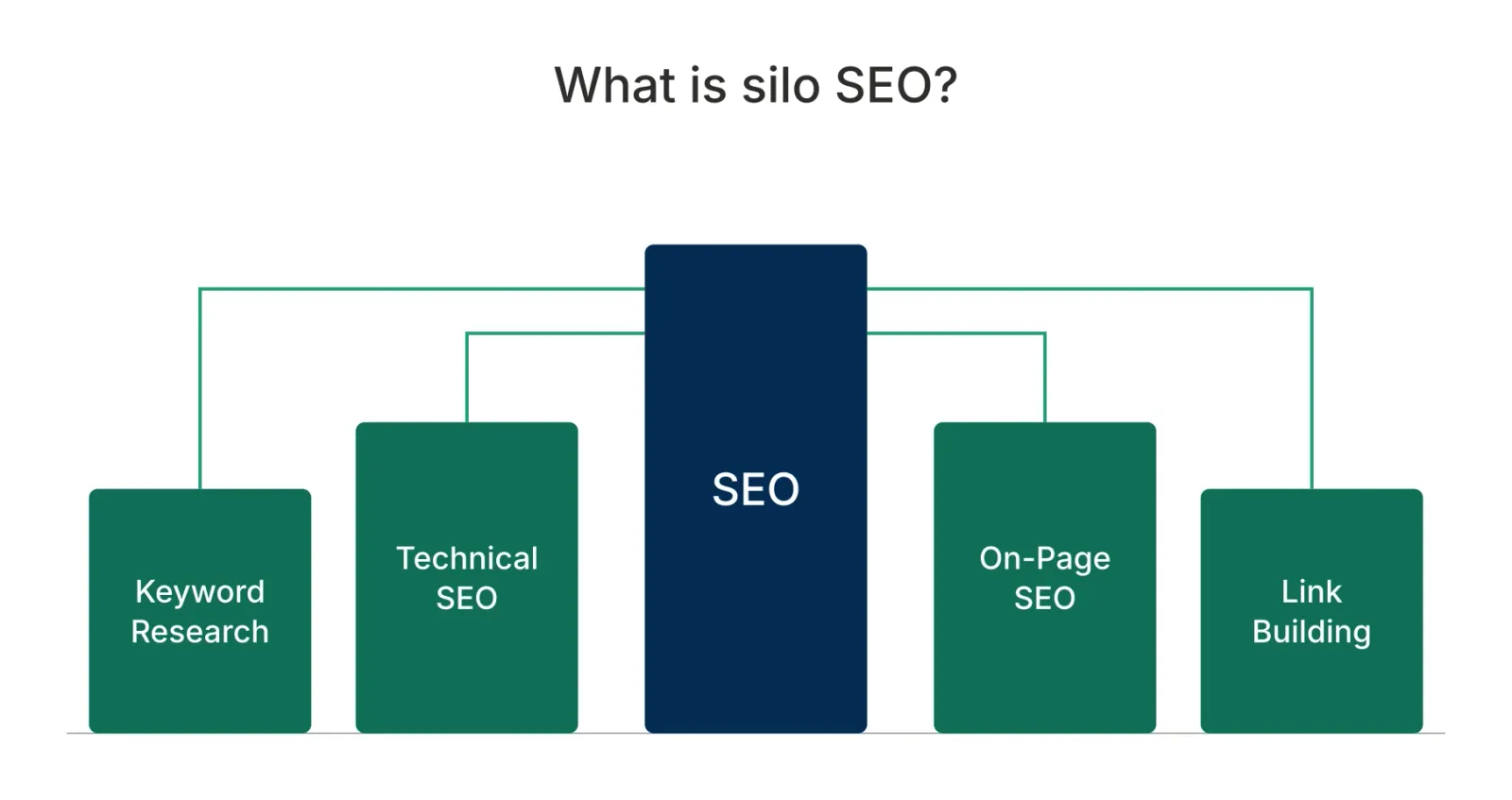
Silo SEO is a website structure that groups related content around specific topics and connects those pages through logical relationships.
Think of a silo as a content group.
A broad topic sits at the top, while more specific pages support that topic.
For example:
SEO
Keyword Research
The Keyword Research section could then contain pages about:
What Is Keyword Research?
Keyword Search Intent
Keyword Clustering
Keyword Mapping
Competitor Keyword Research
This structure makes the relationship between pages easier to understand.
The main topic provides context, while supporting pages cover narrower questions and subtopics.
Physical and Logical Silo Structures
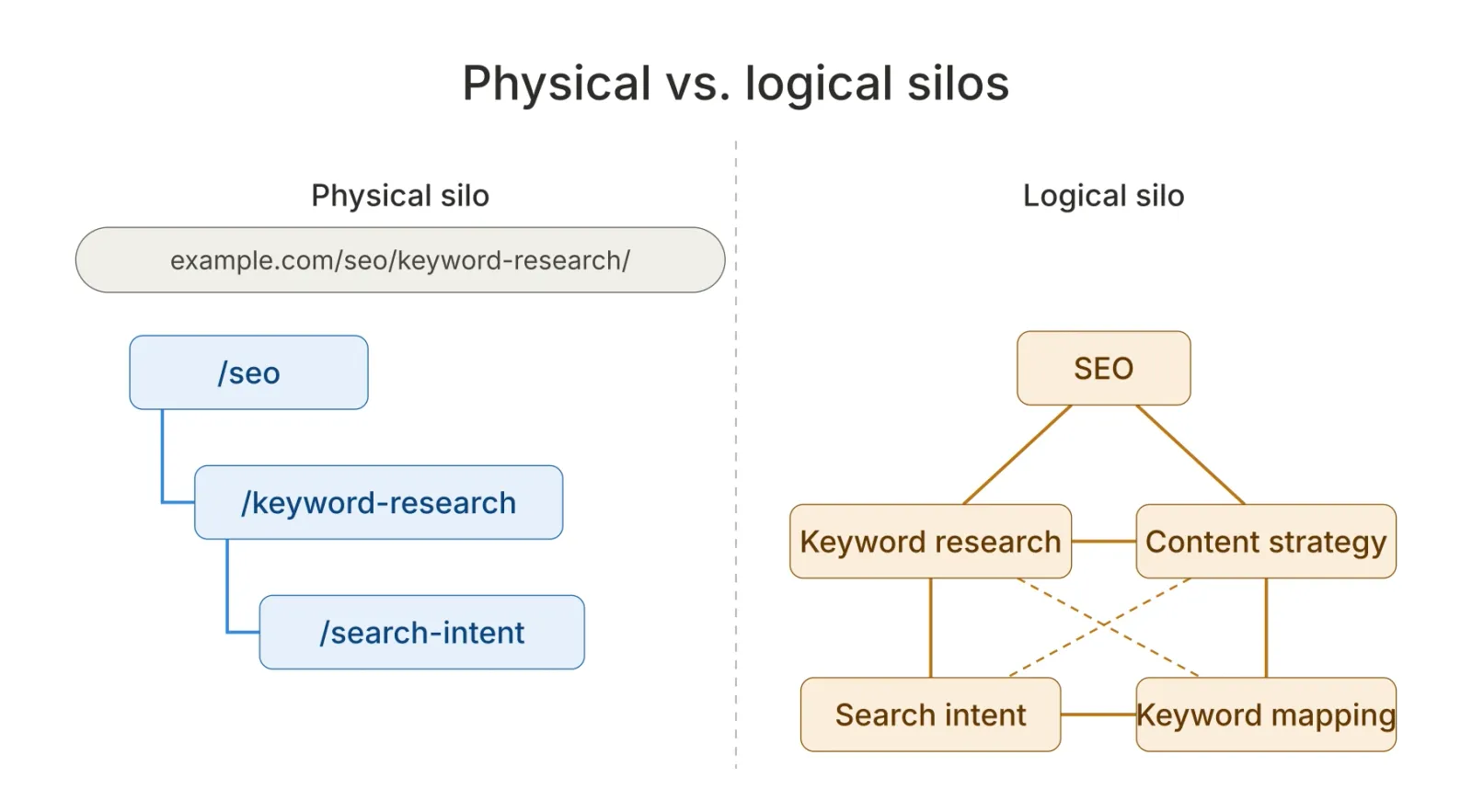
Silo SEO is often discussed in two forms, physical silos and logical silos.
A physical silo uses the website's URL and directory structure to organize content.
For example:
example.com/seo/keyword-research/
Here, the URL itself shows that the page belongs to the SEO and Keyword Research sections.
A logical silo focuses more on the relationships between pages. The URLs may not perfectly reflect the hierarchy, but relevant content is connected through internal links, navigation, categories, and contextual relationships.
For most modern websites, the logical relationship between pages matters more than forcing every URL into a strict hierarchy.
The important question is whether users and search engines can understand how the content relates.
How Silo SEO Improves Website Structure
A good silo structure gives your website a clearer information architecture.
Instead of publishing articles independently whenever a keyword appears, you can organize content around broader subjects and build supporting resources around them.
It Creates Clear Topic Relationships
Suppose you publish an article about keyword clustering.
That page becomes more useful when it connects naturally to related content about keyword research, search intent, keyword mapping, and competitor research.
These relationships show that the pages belong to a broader subject area.
This does not guarantee higher rankings, but it creates a stronger foundation for organizing topical content.
It Strengthens Internal Linking
Internal links help users move between related pages.
They also help search engines discover pages and understand relationships between different parts of your website.
For example, an article about keyword research could naturally link to a detailed guide about search intent.
The search intent article could then link to keyword clustering when discussing how search intent influences keyword grouping.
The important point is relevance.
You do not need to keep every internal link inside a rigid silo. If a useful connection exists between two different topics, linking those pages can make the website easier to use.
It Makes Content Gaps Easier to Find
A silo can also expose missing content.
If your main topic has detailed pages about keyword research and keyword mapping but nothing about search intent, you may have an obvious content gap.
This makes silo planning useful for content strategy, not just website navigation.
It Helps Organize SEO Work
A topic-based structure also makes content planning easier.
Instead of asking, "What keyword should I publish next?", you can ask:
"What part of this topic is missing?"
That change can lead to more useful content because each new page has a clear purpose within the larger website.
How to Create an SEO Silo Step by Step
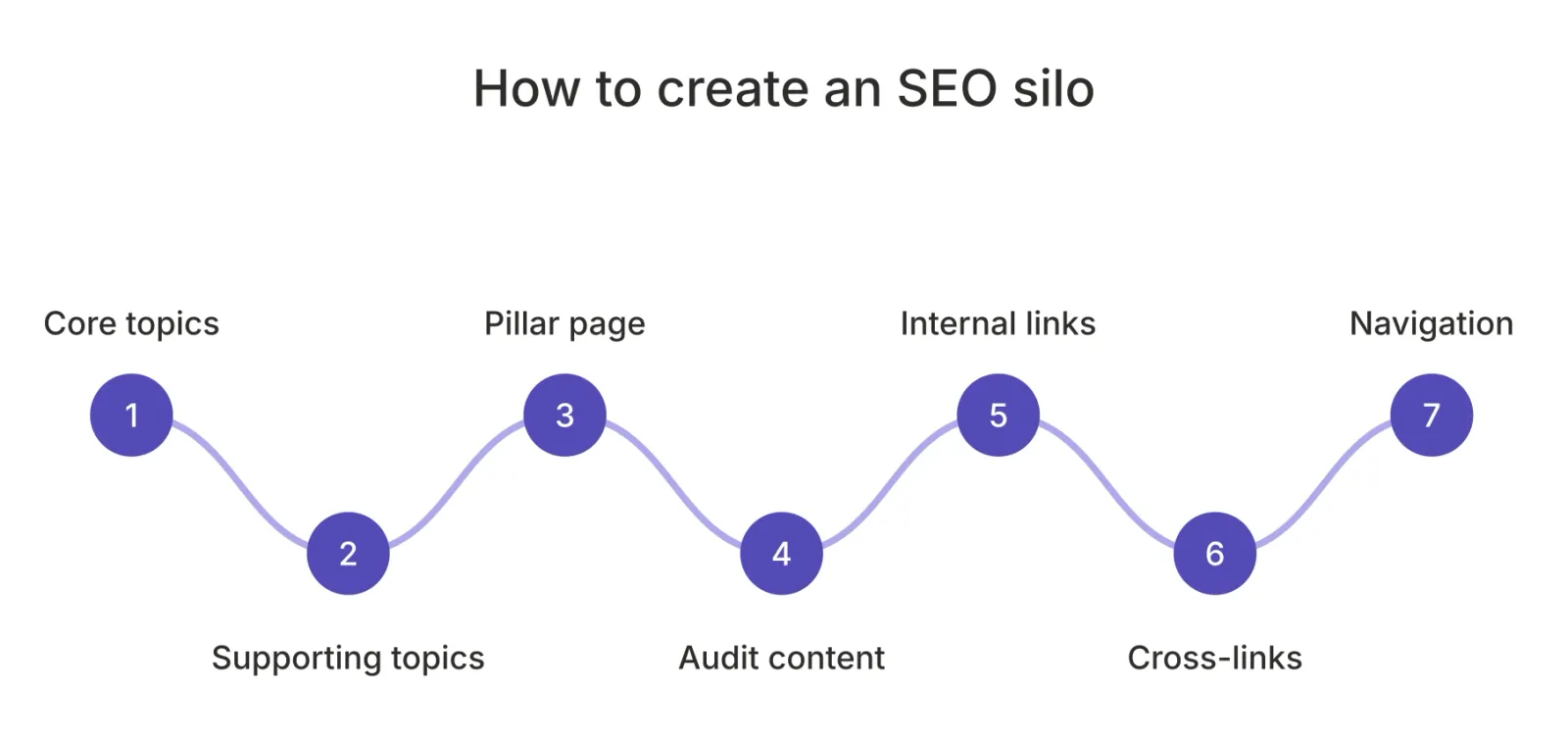
Creating an SEO silo does not require rebuilding your entire website.
You can start with the content you already have and gradually improve its structure.
1. Identify Your Core Topics
Start by identifying the main subjects your website should be known for.
For an SEO website, these might include:
Keyword Research
Technical SEO
On-Page SEO
Link Building
Content Strategy
Keep the number of core topics manageable.
A website does not need dozens of silos. A smaller number of strong topic groups is usually easier to maintain than a complicated hierarchy.
2. Map Supporting Topics
Next, identify the narrower subjects that belong under each core topic.
For example, Keyword Research could include:
Search Intent
Long-Tail Keywords
Keyword Clustering
Keyword Mapping
Competitor Keyword Research
Each supporting page should answer a distinct search need.
Avoid creating several pages that target almost the same intent simply because the keywords are slightly different.
3. Identify Your Main or Pillar Page
Each major topic should have a page that provides a broad overview of the subject.
This page can act as the central resource for the topic.
For example, a page targeting "keyword research" could introduce the overall process and link to more detailed resources about search intent, keyword clustering, and keyword mapping.
The supporting pages can then link back to the broader resource where appropriate.
4. Review Your Existing Content
Before creating dozens of new pages, audit what you already have.
Look for articles that cover related subjects but are not connected through internal links.
You may also find:
Orphan pages with few or no internal links
Multiple articles targeting similar search intent
Pages that belong to the same topic but sit in unrelated categories
Older articles that should be updated or consolidated
This step can prevent unnecessary content production.
5. Build Relevant Internal Links
Connect pages where the relationship is genuinely useful.
For example, an article about keyword mapping could link to a guide about search intent because search intent influences how keywords are mapped to pages.
The same article could also link to keyword clustering if the discussion covers grouping related keywords.
Avoid adding links simply to satisfy a predetermined silo rule.
A useful internal linking strategy follows the reader's next logical question.
6. Add Contextual Cross-Links
Modern silo SEO should not mean isolating sections from each other.
Some topics naturally overlap.
For example, a technical SEO article about website architecture may need to reference internal linking. A content strategy article may need to reference keyword mapping. A link building article may need to reference competitor research.
These cross-links can strengthen the overall information architecture when they are relevant.
The goal is a connected website, not a collection of disconnected boxes.
7. Review Navigation and Categories
Finally, check whether your navigation reflects the way users actually browse your website.
Categories, menus, breadcrumbs, and internal links should make important content easy to reach.
Do not create complicated menus just because your SEO silo diagram looks complicated.
The structure should make the website easier to use, not harder.
Silo SEO Example
Here is a simple example of how an SEO website could organize its content:
SEO
├── Keyword Research
│   ├── What Is Keyword Research?
│   ├── Keyword Search Intent
│   ├── Long-Tail Keywords
│   ├── Keyword Clustering
│   ├── Keyword Mapping
│   └── Competitor Keyword Research
│
├── Technical SEO
│   ├── Technical SEO Audit
│   ├── Crawlability
│   ├── Website Architecture
│   └── XML Sitemaps
│
├── On-Page SEO
│   ├── Title Tags
│   ├── Meta Descriptions
│   ├── Internal Linking
│   └── SEO Content Optimization
│
└── Link Building
    ├── Link Building Strategies
    ├── Digital PR
    ├── Broken Link Building
    └── Backlink Analysis
This is a planning model, not a rule that every website must follow exactly.
For example, the Internal Linking page belongs naturally under On-Page SEO, but it may also be relevant when discussing Technical SEO or Website Architecture.
That is where contextual cross-linking becomes useful.
If a page about website architecture discusses how internal links connect important pages, linking to the dedicated Internal Linking guide makes sense even though the pages sit in different topic groups.
The relationship between the pages matters more than keeping every link inside a strict silo.
Is Silo SEO Still Relevant?
Yes, but the way you apply it matters.
The basic idea behind silo SEO remains useful because websites benefit from clear organization, relevant internal linking, and logical relationships between related content.
What has become less useful is treating a silo as a rigid structure where every page must remain isolated from content outside its assigned group.
A modern website should allow related topics to connect naturally.
For example, keyword research may belong to one topic group, while content strategy belongs to another. But keyword research directly influences content strategy.
Blocking those pages from linking to each other would create an artificial barrier.
When I review content structures, I would focus less on whether every URL fits into a perfect silo and more on whether the website has clear topical relationships.
Ask these questions:
Does every important topic have enough supporting content?
Can users move naturally between related pages?
Are important pages receiving relevant internal links?
Are there orphaned or disconnected pages?
Are several articles competing for the same search intent?
Can someone understand the site's subject structure without needing to study the URL hierarchy?
If the answer to these questions is yes, your website may already have many of the practical benefits associated with silo SEO.
Silo SEO vs. Topic Clusters
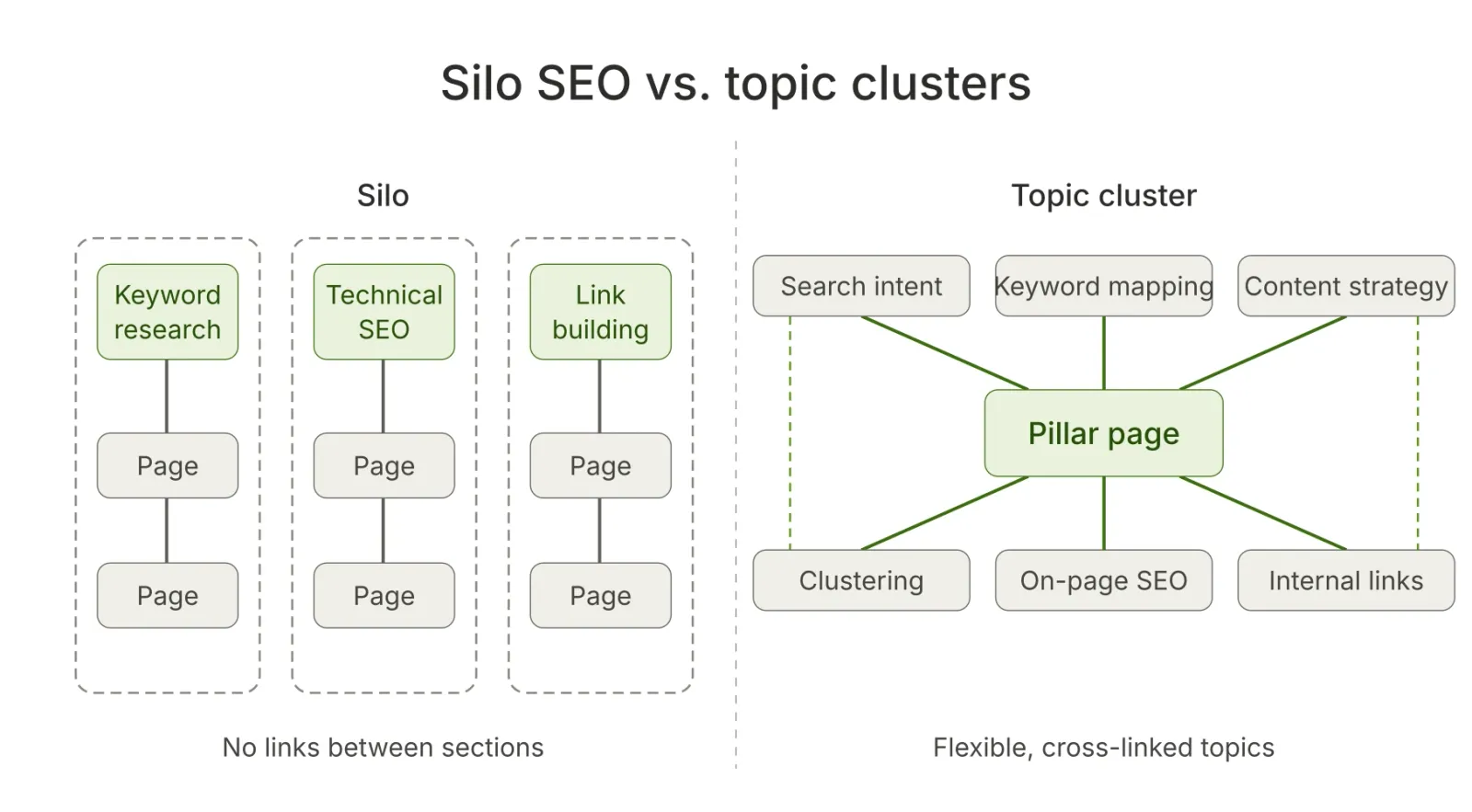
Silo SEO and topic clusters share a similar goal, but they are often approached differently.
A traditional silo structure emphasizes grouping content into defined sections.
A topic cluster typically starts with a broad pillar page and connects it to related supporting content through internal links.
For example:
Keyword Research
├── Search Intent
├── Long-Tail Keywords
├── Keyword Clustering
├── Keyword Mapping
└── Competitor Keyword Research
This looks similar to a silo because both approaches organize related content around a central subject.
The practical difference is that topic clusters generally allow more flexibility in how pages connect.
A page about search intent may naturally connect to content strategy, while keyword mapping may connect to on-page SEO.
That does not weaken the structure.
It creates a more realistic model of how topics relate to one another.
For most websites, I would use the strongest parts of both approaches: clear topic groups, strong pillar pages, relevant supporting content, and contextual cross-links between related subjects.
How to Audit an Existing Silo Structure
You do not need to start from scratch if your website already contains hundreds of pages.
Start by mapping your existing content.
Create a list of your main topics and assign each page to the topic it supports.
Then look for problems.
An important page with no internal links may be an orphan page.
Several pages targeting almost identical search intent may indicate content overlap.
A supporting article that has no connection to a relevant pillar page may need better internal linking.
You should also look for useful relationships between different silos.
For example, if your keyword research section contains a page about keyword mapping and your content strategy section contains a page about content planning, those pages may benefit from linking to each other.
The audit should answer one central question:
Does the current structure help users and search engines understand the relationships between my pages?
If not, improve the relationships before creating more content.
Common Silo SEO Mistakes to Avoid
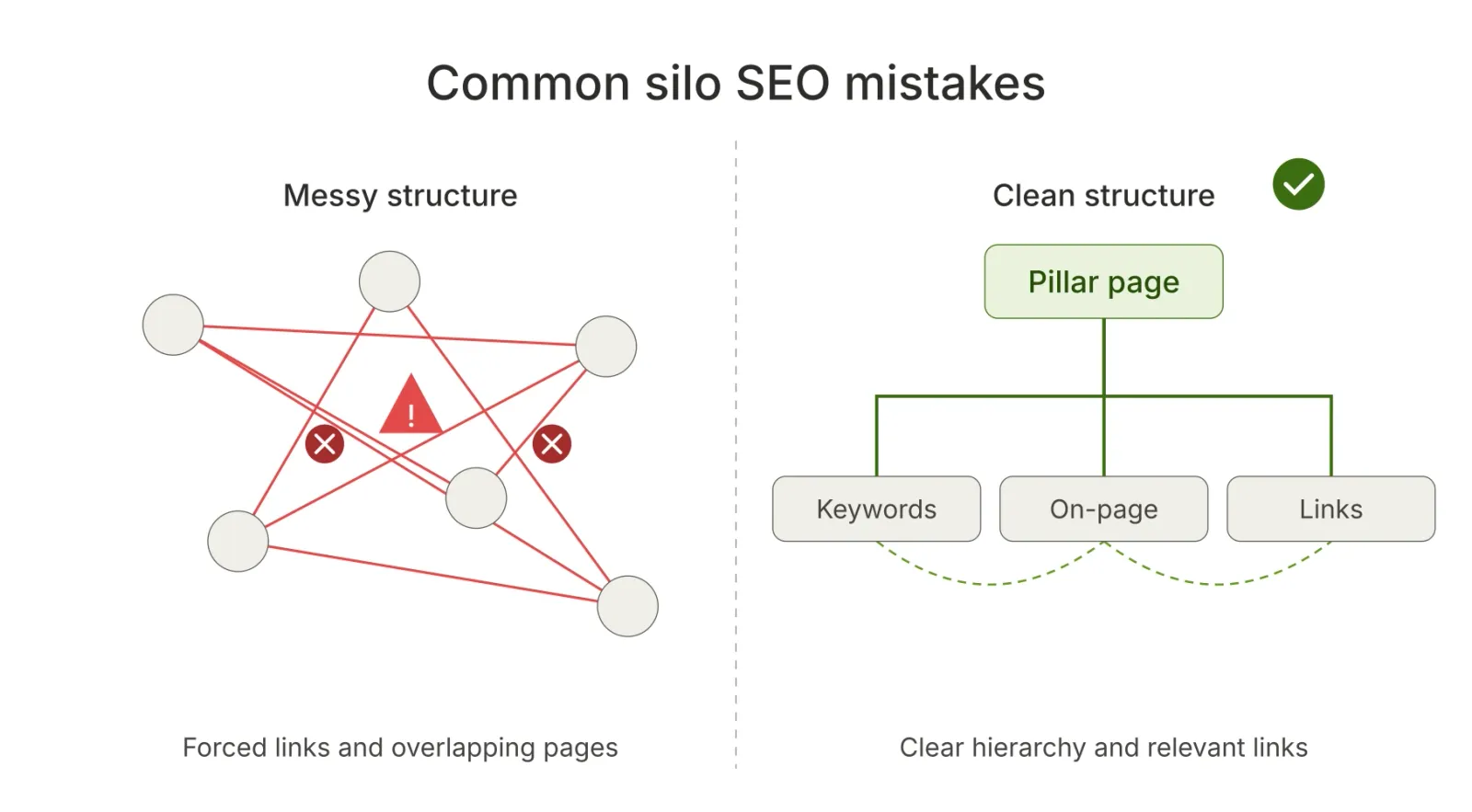
Silo SEO becomes less useful when the structure is created for SEO theory rather than users.
Creating Too Many Silos
A website does not need a separate silo for every keyword category.
Too many sections can make navigation confusing and leave each section with too little useful content.
Start with meaningful topics that represent genuine areas of expertise.
Publishing Several Pages With the Same Intent
Creating multiple articles that answer nearly the same question can create unnecessary overlap.
Before publishing a new page, compare its search intent with existing content.
If an existing article already satisfies the intent, consider improving or expanding it instead.
Forcing Internal Links
Not every page needs to link to every other page.
Adding irrelevant links simply because two URLs appear in the same silo can make the content harder to read.
Internal links should help the reader continue their research.
Ignoring Existing Content
Building a new silo while leaving older relevant pages disconnected is a common mistake.
Review your existing content first.
You may already have the pages needed to create a strong topic group.
Treating URLs as the Entire Silo
A URL structure can help communicate hierarchy, but URLs alone do not create a useful content structure.
Internal links, navigation, categories, breadcrumbs, content relationships, and search intent all matter.
Making the Hierarchy Too Complicated
If your website requires a large diagram to explain how users should navigate it, the structure may be too complex.
Keep the hierarchy simple enough for both users and search engines to understand.
Final Thoughts
Silo SEO is best understood as a method for creating clearer relationships between related content.
The goal is not to build a rigid website where every page is trapped inside a predefined section.
A stronger approach is to identify your core topics, group related content, create useful supporting pages, connect those pages through relevant internal links, and allow logical relationships between different topic groups.
If your website already has a large content library, start with an audit instead of rebuilding everything.
Look for orphan pages, overlapping content, missing supporting topics, weak internal links, and useful cross-linking opportunities.
The strongest silo structure is the one that helps visitors find the information they need while making the overall subject structure easier to understand.
If you want help improving your website structure, content strategy, or SEO approach, you can contact Shahid Shahmiri to discuss your project.
Frequently Asked Questions
What is silo SEO?
Silo SEO is a method of organizing related website content into clear topic groups. The structure connects broader topics with supporting pages through relevant internal links and navigation.
Does silo SEO improve rankings?
A well-organized website can make content easier to discover and understand, but silo SEO does not guarantee higher rankings. Rankings depend on many factors, including content quality, search intent, relevance, authority, technical performance, and competition.
How do I create an SEO silo?
Start by identifying your main topics, map supporting content, create or identify pillar pages, group existing articles, and build relevant internal links between related pages.
What is the difference between a physical and logical silo?
A physical silo uses URL and directory structures to organize content. A logical silo focuses on relationships between pages through internal links, navigation, and topical relevance.
How many pages should an SEO silo have?
There is no fixed number. A silo should contain enough useful content to cover a meaningful topic without creating unnecessary pages.
Should I keep internal links inside the same silo?
No. Relevant internal links can connect different silos when the relationship is useful to the reader. Modern silo SEO should focus on logical connections rather than rigid isolation.
Can silo SEO help with internal linking?
Yes. A silo structure can help identify which pages should connect to each other. The strongest internal links are relevant, contextual, and useful to the reader.
Can I create silos with existing content?
Yes. You can audit your existing pages, group them by topic, identify missing relationships, improve internal links, and reorganize categories or navigation without rebuilding the entire website.
Read this article in: