
Running a successful business today requires more than just a great idea. It demands a roadmap, a track you can follow to ensure growth, resilience, and scalability.
That’s where the concept of a “Business Track” comes in: a structured approach to aligning strategy, execution, and innovation.
Think of it as the rails that keep your company moving forward with direction and purpose. Without one, many organizations drift, react to challenges instead of anticipating them, and struggle to sustain growth.
In fact, research shows that 70% of businesses that fail do so because of poor planning and lack of strategic direction (CBInsights).
A business track solves this by aligning vision with action helping leaders focus on growth, efficiency, and innovation while avoiding costly detours.
But a track isn’t just about strategy on paper. It’s about execution, measurement, and adaptability. From setting clear KPIs to leveraging marketing and technology, businesses that follow a well-defined track consistently outperform competitors.
For example, companies with a documented strategy are 313% more likely to achieve success (CoSchedule).
In this article, I’ll share practical strategies that I’ve seen work across industries, backed by statistics, case studies, and proven methods that businesses can adopt today.
1. Why Every Business Needs Clear Track
Every business, whether a startup or an established enterprise, faces countless decisions each day from how to allocate resources, to which markets to enter, to how to engage with customers.
Without a clear track, these decisions often feel reactive, scattered, and disconnected from long-term goals.
The result? Wasted time, misaligned teams, and stalled growth.
A business track acts like a blueprint, ensuring that daily actions support a company’s broader vision. It provides clarity on where the business is heading, how it will get there, and which priorities matter most.
With this direction, companies can move forward with confidence, even when markets shift or unexpected challenges arise.
- According to McKinsey, companies with a clearly defined strategy are 70% more likely to achieve above-average growth.
- A “business track” ensures that every action ties back to long-term objectives.
Mini Case Study:
A mid-sized eCommerce startup restructured its operations around a clear “growth track.” By focusing on a defined customer acquisition strategy and cutting unnecessary initiatives, it scaled revenue by 45% in one year.
2. Tracking Growth Through Data & KPIs
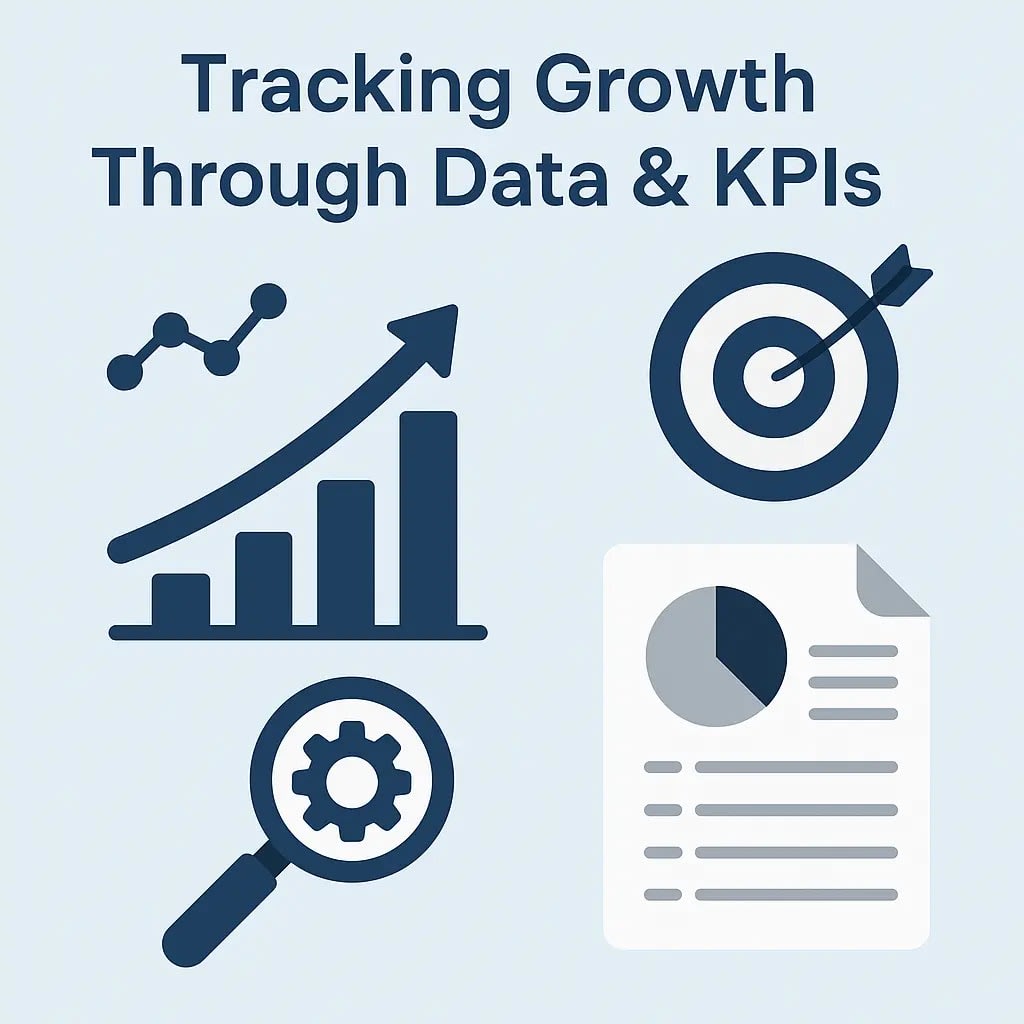
You can’t improve what you don’t measure. Too often, businesses set ambitious goals but fail to track the numbers that truly reveal whether they’re on the right path.
Revenue, customer satisfaction, and market share may be big-picture outcomes, but the real insights come from the key performance indicators (KPIs) that act as checkpoints along the business track.
KPIs help leaders distinguish between what feels successful and what actually drives growth. For example, a spike in website traffic might look impressive, but if customer acquisition costs are climbing or conversion rates are falling, that growth may not be sustainable.
Tracking the right metrics ensures you’re scaling smart, not just scaling fast. The power of data-driven strategy is undeniable.
According to Forrester, companies that prioritize data-driven decision-making are 23 times more likely to acquire customers, 6 times more likely to retain them, and 19 times more likely to be profitable.
In other words, businesses that monitor KPIs don’t just track progress they build a foundation for long-term resilience.
Moreover, KPIs provide clarity across teams. They act as a common language, helping marketing, sales, operations, and leadership stay aligned.
When everyone measures success the same way, businesses eliminate guesswork and create accountability at every level.
- Numbers tell the real story of business performance.
- Build your track with measurable KPIs: revenue growth, customer acquisition cost, lifetime value, and retention.
Mini Case Study:
Netflix built its empire by obsessively tracking user behavior and personalizing recommendations. Their data-first track transformed them from a DVD rental service to a global streaming powerhouse.
Check out our recent blog on: All In One Marketing Framework: Building Growth Strategy
3. Building Authority with Marketing & Content
In today’s competitive landscape, visibility isn’t enough businesses must earn authority. Customers no longer trust brands simply because they exist.
They trust the ones that consistently educate, provide value, and position themselves as thought leaders in their industry. This is where marketing and content step in as a powerful engine for building credibility.
Content marketing not only drives awareness but also creates lasting trust.
According to the Content Marketing Institute, 70% of consumers prefer learning about a brand through articles and blogs rather than traditional ads, while HubSpot reports that companies with active blogs generate 55% more visitors and 97% more backlinks than those without.
These numbers highlight how strategic content can directly impact SEO, organic growth, and brand reputation.
Authority grows when a business becomes the go-to resource for answers. Whether it’s publishing industry insights, how-to guides, or case studies, valuable content attracts not just customers but also media mentions, partnerships, and backlinks each of which strengthens a brand’s digital footprint.
Over time, this positions the business as a leader in its niche, making it harder for competitors to catch up.
At its core, building authority with marketing and content isn’t about selling. It’s about serving, offering knowledge that informs, educates, and solves problems.
The businesses that understand this shift are the ones that dominate search rankings, capture customer loyalty, and secure long-term growth.
- A key part of any business track is visibility.
- Strong branding and consistent messaging build trust and drive long-term results.
Mini Case Study:
Shopify’s blog became a major part of their growth engine, providing eCommerce entrepreneurs with high-value resources while subtly converting readers into paying customers.
4. Innovation as Part of the Track
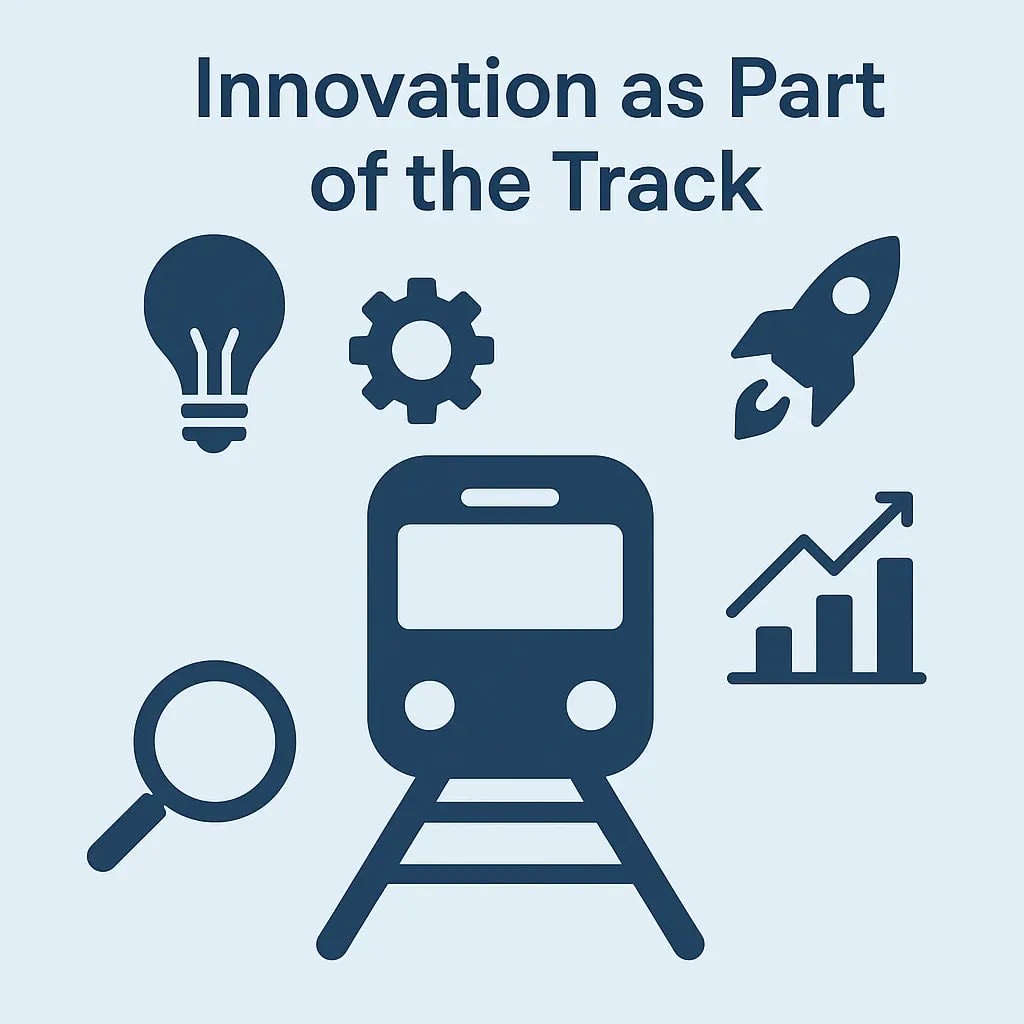
No matter how successful a business model may seem today, standing still is the fastest way to fall behind. Markets evolve, customer needs shift, and technology keeps rewriting the rules.
That’s why innovation isn’t just an optional add-on it’s a core part of a winning business track.
Innovation doesn’t always mean inventing something brand-new; it often comes from improving what already exists.
It could be streamlining operations, adopting digital tools, enhancing customer experiences, or rethinking how products are delivered.
In fact, PwC’s Global Innovation Study found that 61% of executives see innovation as essential to driving growth, and companies that actively invest in innovation consistently outperform competitors who play it safe.
History proves this point. Kodak once dominated the photography industry but failed to embrace digital cameras early enough, a lack of innovation that led to its decline.
Meanwhile, companies like Apple, Tesla, and Amazon thrive precisely because they build innovation into their DNA. Their track isn’t linear, it’s adaptive, flexible, and fueled by constant reinvention.
For smaller businesses, innovation may mean experimenting with new marketing channels, testing fresh product lines, or using technology to cut costs.
The key is staying curious and agile, always asking: How can we do this better, faster, or smarter than before?
- Sticking to the same playbook isn’t sustainable in competitive markets.
- Incorporating R&D, new technologies, and creative campaigns keeps businesses ahead.
Mini Case Study:
Tesla’s track is built on innovation from electric vehicle design to direct-to-consumer sales. Their willingness to disrupt industries has positioned them as a global leader.
5. Leadership & Team Alignment
Even the best strategies fall apart without strong leadership and a team that’s aligned behind a common vision.
A business track may outline where you want to go, but it’s leadership that drives the train setting direction, making decisions, and ensuring everyone is moving in sync.
Without that alignment, teams often work in silos, duplicate efforts, or chase goals that don’t contribute to the bigger picture.
Studies back this up: Gallup research shows that highly engaged teams are 21% more profitable, and Deloitte reports that companies with strong leadership pipelines are 1.5x more likely to outperform their peers.
When leaders clearly communicate goals and values, employees feel connected to the mission and more motivated to contribute.
Alignment also means clarity. When teams understand not just what they are doing, but why it matters, they take ownership of outcomes.
This fosters accountability, reduces conflict, and builds momentum. On the flip side, misaligned teams often waste time, lose focus, and struggle to deliver consistent results.
Great leaders don’t just manage people they inspire, coach, and empower them. They create an environment where every team member understands how their role supports the business track, making success a shared journey rather than an individual effort.
- No strategy works without the right people behind it.
- Leaders must set the vision and ensure everyone understands their role in the track.
Mini Case Study:
Google’s “OKR” (Objectives & Key Results) framework keeps teams aligned, ensuring that every employee’s goals feed into the company’s larger track for success.
6. Staying Agile in a Changing World
Change is the only constant in business. Markets shift, customer behaviors evolve, and unexpected disruptions from global pandemics to new technologies can upend entire industries overnight.
In such an environment, agility isn’t just an advantage; it’s a survival skill.
Businesses that cling too tightly to rigid plans often struggle to adapt, while those with flexible tracks can pivot quickly and seize opportunities others miss.
Agility means more than reacting to change; it’s about building adaptability into the DNA of your business. This includes flexible processes, a culture that embraces experimentation, and leadership willing to adjust strategies when the evidence demands it.
According to Deloitte, companies that adapted quickly to digital transformation during the pandemic grew revenues up to 5x faster than their slower competitors.
The lesson is clear: agility creates resilience. Whether it’s adopting new technologies, rethinking customer engagement, or testing innovative business models, companies that remain agile can navigate uncertainty with confidence. They’re not derailed by change, they thrive because of it.
For startups, this might mean testing ideas rapidly and iterating based on feedback. For established businesses, it may involve diversifying revenue streams or restructuring teams for faster decision-making.
Whatever the approach, agility ensures your business track isn’t a fixed path but a living framework that evolves with the world around it.
- Markets change rapidly, flexibility is part of a winning track.
- Build adaptability into your strategy so you can pivot when needed.
Mini Case Study:
Restaurants that adopted QR code menus and online ordering early in 2020 survived and even grew, while many competitors without digital tracks struggled.
Conclusion: The Power of a Strong Business Track
Every business that thrives long-term follows a clear track: a combination of strategy, measurement, innovation, and people.
Whether you’re running a startup or scaling an established company, building your own business track will help you navigate challenges and seize opportunities.
The key is not just to follow a track but to build one that evolves with your business.